The Exorcist (1973)
“The power of Christ compels you…”
By Midnight Macabre • Published
“The power of Christ compels you…”
By Midnight Macabre • Published
Few films have ever carried the reputation of The Exorcist, a movie whispered about in lobbies, banned in towns, condemned from pulpits, and watched with hands half-covering eyes. William Friedkin’s 1973 masterpiece is not merely a possession film—it is an autopsy of faith, guilt, grief, and the thin membrane separating the spiritual from the profane. What makes it endure is not the pea soup or the head spins, but its calm willingness to stare into the abyss with a straight face.
Original trailer for The Exorcist (1973)
At its core, The Exorcist is a story of three people losing their foundations. Chris MacNeil, a mother anchored in modern reason, is pulled into a battle she never believed could exist. Father Karras, a priest crumbling under grief and spiritual doubt, finds himself confronting the very thing he fears he no longer believes in. And Regan, once a cheerful girl, becomes the battleground for an ancient evil patient enough to wait centuries for the right vulnerable soul.
Friedkin’s direction is clinical—almost cold. He shoots the MacNeil home like a medical ward, letting supernatural horrors unfold with the restraint of a documentarian. There are no cheap angles or frantic edits. The terror comes from silence, from pauses too long to be comfortable, from the slow unraveling of a household gasping for answers as the world outside remains callously ordinary.
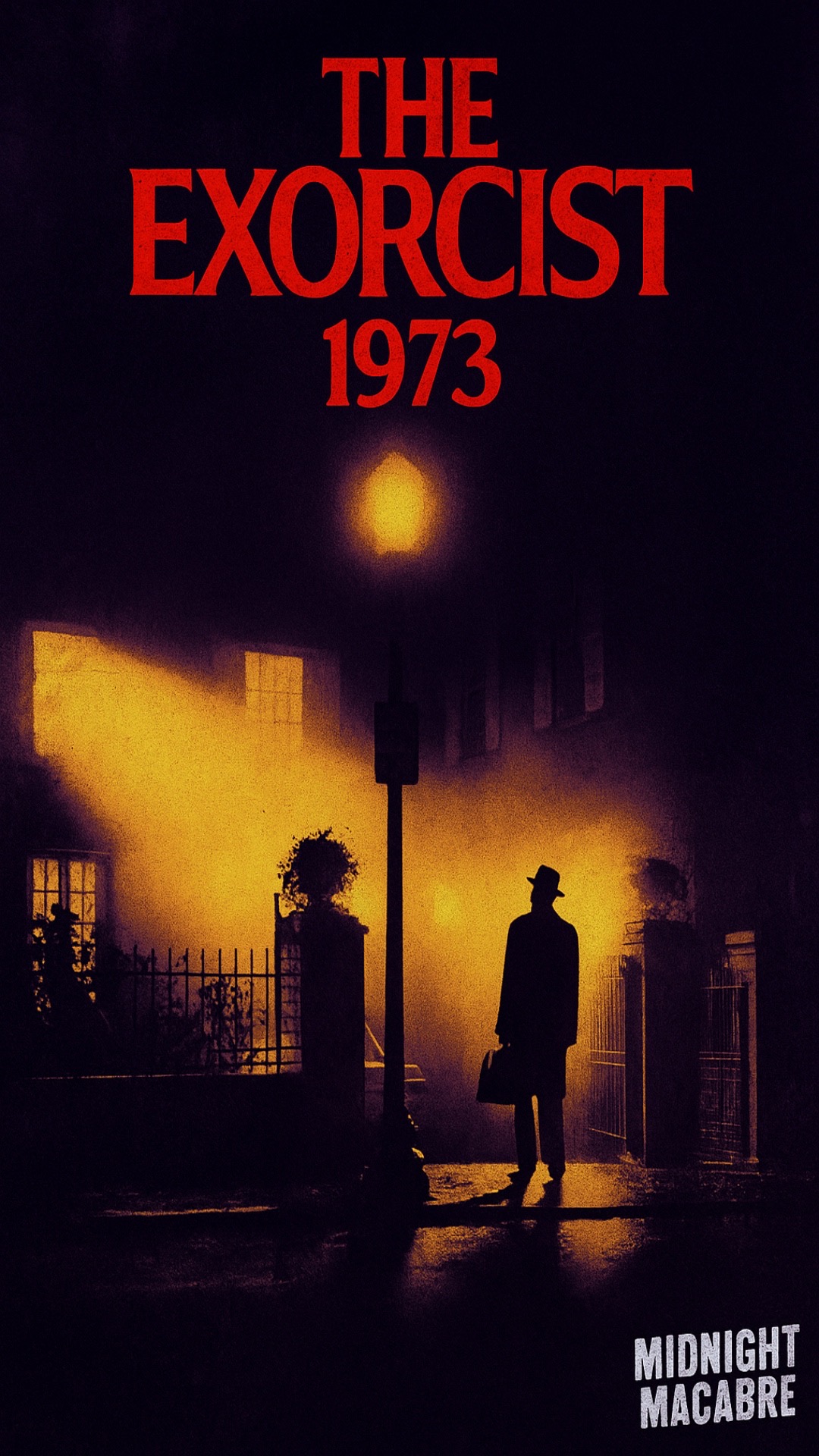
The film’s most iconic moment is not the exorcism itself but the quiet arrival of Father Merrin. He steps out of a taxi into a halo of streetlight and fog—an image so stark it feels carved from mythology. No dialogue. No spectacle. Just a lone priest framed against darkness, as if summoned by forces older than the city around him.
It is cinema distilled to its purest symbol: a man of faith standing before the unknowable. In that single image, Friedkin tells us the true nature of the conflict. This is not a possession; it is a war.
Much of The Exorcist’s terror is auditory. Mike Oldfield’s “Tubular Bells” is used sparingly, like a warning chime echoing down a cold corridor. Friedkin leans heavily into sound design: scratches in the walls, guttural whispers, thumps from the attic. Silence becomes a weapon. Rooms feel too still. The absence of score forces the viewer to lean in—and that’s when the film strikes.
Visually, the film is stark and grounded. The colors are winter-pale. Shadows stretch long across hallways. The exorcism room is lit like a tomb. Nothing feels exaggerated, which makes the supernatural moments feel like intrusions into a world that should be safe but isn’t.
The Exorcist remains one of the most influential horror films ever made—not because of shock value, but because of its conviction. It believes in its evil. It respects the weight of spiritual terror. And it treats its characters not as victims but as people fighting battles larger than themselves.
Decades later, its power has not faded. Its questions about faith, the fragility of the human mind, and the darkness that lives at the edge of human understanding still haunt audiences. It is the rare horror film that feels like scripture written in blood.
Related Reviews: Nosferatu (1922) • Psycho (1960) • The Thing (1982)