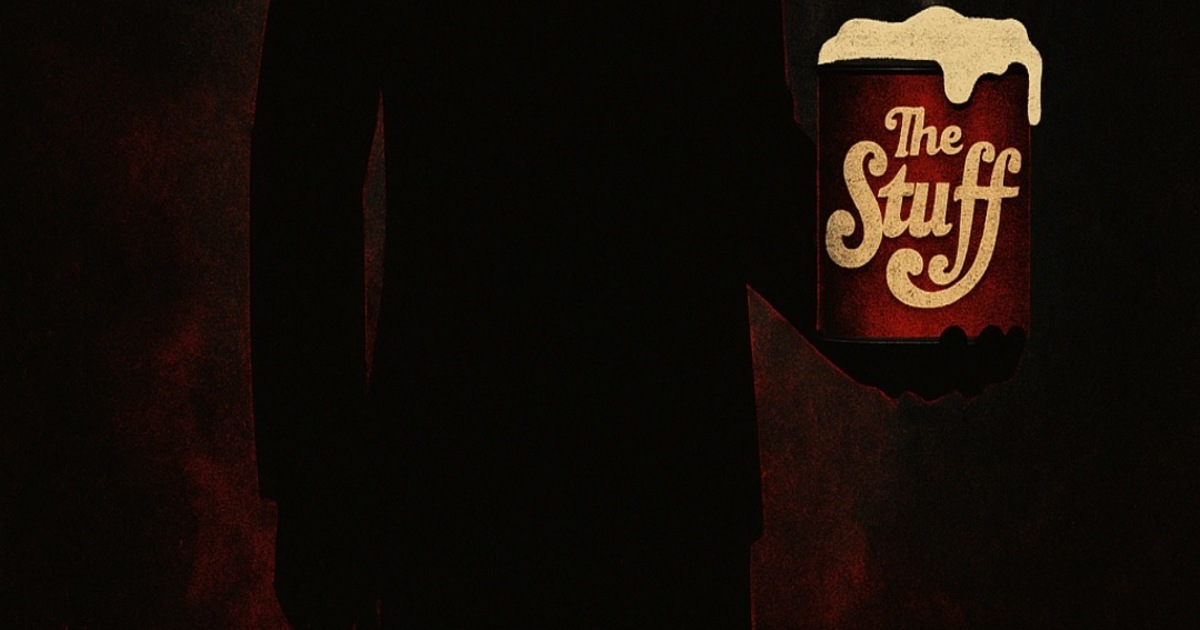
What if America’s most irresistible dessert wasn’t food at all, but a living parasite sold with a smile? Larry Cohen’s The Stuff turns the decade’s sweetest advertising into a body-horror punchline, blending paranoia and consumerism into one oozy, unforgettable satire. Reuniting with Michael Moriarty (after Q), Cohen mounts a corporate-espionage caper that looks like a commercial and plays like a warning label.
Official trailer for The Stuff (1985)
Rot in a Pretty Package
Cohen’s favorite preoccupations—alien menace, institutional rot, and media hypnosis—coalesce into a satire that’s as brazen as it is playful. The premise is deliciously simple: a mysterious white dessert dubbed “The Stuff” conquers supermarket aisles and TV screens, turning the nation into smiling addicts. Enter Moriarty’s David Rutherford, a fixer with a salesman’s grin and a PI’s instincts, hired to find out what’s really in the tub. Cohen shoots like a prankster conspiracy theorist: austere boardrooms, glossy talk shows, and sanitized kitchens become arenas for a creeping, edible invasion. The tonal whiplash is intentional—jingles, news hits, and fake ads intercut with practical-effects mayhem—to show how easily horror can be sweetened, packaged, and sold back to us.
What keeps The Stuff lively is its tactile ingenuity. Beds swallow people whole, walls bulge, tubs erupt. You can feel the off-camera pumps and the floor tilting—handmade spectacle that turns slime into character. Cohen is never content with a single punchline; he escalates. Each gag exposes another layer of collusion between appetite and advertising, reminding us that branding often sells a feeling we’re desperate to believe.
Key Scene: The Ad Becomes the Monster
In a pristine, brightly lit kitchen, a TV spot beams promises of bliss while a family spoons directly from the tub. The joke flips when the dessert moves first—gliding from container to throat as if the ad itself commanded it. Cohen crystallizes the film’s thesis here: the product is the propaganda. Our trust in the image is exactly what makes the invasion possible. It’s giddy, nasty, and precisely framed, a mini-manifesto for the movie’s collision of salesmanship and slime.
Sound & Style: Smile, Then Shiver
The soundscape oscillates between chipper commercial cues and low synth unease—bright enough to sell, dark enough to haunt. Visually, Cohen favors clean, ad-ready compositions that chaos keeps interrupting: shelves aligned to perfection, talk-show couches arranged like mousetraps, sterile labs where the goo won’t behave. The contrast is the joke. America looks safe and appetizing right up until it starts to melt.
Legacy and Influence
Part monster movie, part moral mirror, The Stuff endures because it nails the laugh before the lecture. Moriarty’s breezy charisma sells the caper, but Cohen’s feral wit makes it stick; in a century flooded with products that promise more life for less consequence, his proposition feels evergreen: consume carefully, because the sweetest things sometimes eat back. The fake commercials were prophetic, the media satire now feels documentary, and the goo—delightfully—still plays. As cult cinema, it’s sticky and subversive; as social critique, it’s shockingly fresh.
Related Reviews: Halloween (1978) • The Exorcist (1973) • Nosferatu (1922)